
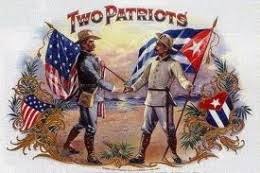
Annexationism—a political doctrine advocating the incorporation of a state, or part of a state, into another—emerged in Cuba in the mid-19th century. Although there were initially attempts to join other countries, the predominant objective was annexation by the United States—a federal republic founded in 1776 following the independence of the 13 English colonies in North America—which, through the annexation of Texas, California, and New Mexico, eventually came to comprise 50 states: 48 contiguous states spanning the Atlantic and Pacific Oceans, plus Alaska and Hawaii.
The prominence attained by Cuban annexationism between 1845 and 1855 can be attributed to the following causes: the fact that the United States was Cuba’s second-largest supplier market, purchasing products from the island worth nearly seven million pesos annually; the fear among Cuban slave-owning estate owners that slavery would be abolished without compensation; the threat issued by the Governor of Cuba, Juan de la Pezuela, to emancipate all slaves acquired after 1820; the assurance that slavery would remain intact in the Southern United States; and the rapid development achieved by that country, which established North America as a model to be emulated in terms of efficiency, commerce, industry, and technology.
The reasoning of the annexationists was simple: if they were to become part of the United States, their commercial opportunities would multiply, tariff barriers would disappear, and they would achieve greater progress than if they remained a colony of Spain. Influenced by these factors, they began to conspire.
In 1847, they established the Havana Club, with branches in Puerto Príncipe and Santiago de Cuba; meanwhile, in the United States, they founded the Cuban Junta of New Orleans, the Cuban Council of New York, and the newspaper *La Verdad*. As part of their campaign, they publicized their contacts with U.S. authorities and disseminated details regarding preparations for expeditions to Cuba. When England opened its markets to Cuban sugar, José Luis Alfonso—a key figure in the annexationist movement, head of Cuba’s most important sugar conglomerate, and president of the Havana Club—lunched with Captain General José Gutiérrez de la Concha and subsequently withdrew from the annexationist movement, taking his sugar group with him. This suggests—as recounted by Manuel Moreno Fraginals—that they wanted the Spanish government to be aware of their actions, a fact that could explain the failure of the early expeditions.
In 1848, Narciso López—a former general and field marshal in the Spanish army who had served as Governor of the Central Department and president of the Permanent Executive Military Commission—assumed a leading role in the movement. He encouraged the Manicaragua Conspiracy (also known as the *Mina de la Rosa Cubana* Conspiracy), led by his friend Isidoro Armenteros, president of the Puerto Príncipe Liberating Society. Another uprising—
led by Joaquín de Agüero, the commander of operations in Camagüey—met with the same fate.
Agüero and Armenteros were executed alongside several of their comrades. López fled to the United States, where he organized new expeditions. One such expedition, scheduled to depart from Round Island near New Orleans, was discovered before it could set sail. Another successfully landed at Cárdenas, Matanzas; the force seized the city and, on May 19, 1850, hoisted our national flag for the very first time. Finally, during a subsequent expedition that landed in Pinar del Río, López was captured and executed.
Subsequently, the Vuelta Abajo Conspiracy—centered in Candelaria, Pinar del Río, and led by Francisco Frías and Anacleto Bermúdez—as well as an expedition headed by the Spaniard Ramón Pintó and another led by Francisco Estrampes (a native of Matanzas), all ended in failure; in each instance, the leaders were executed. Meanwhile, in 1855, the police discovered the premises in Havana where *La Voz del Pueblo* was being published; consequently, the young typographer Eduardo Facciolo was executed by garrote before a crowd.
During that period, annexationists received support solely from the slaveholding states of the American South. With the North’s victory in the Civil War and the subsequent abolition of slavery, the fate of Cuban annexationism was sealed. However—as Moreno Fraginals notes—it is an oversimplification to assert that the annexationists sought merely to protect their ownership of slaves. There were annexationists who owned no slaves—or who were even anti-slavery—both before and after the movement’s ultimate failure; this is a significant fact in the history of Cuba.
Intentions regarding annexation may originate from a major power, from a people, or from both actors simultaneously. When such intentions stem from a people, the objective pursued is the improvement of living conditions. In the case of Cuba, this explains why—even after being abandoned by wealthy estate owners—annexationist ideas remained alive among men who owned no slaves and who were enamored of liberal principles and the American democratic system. This sentiment was evident among many pro-independence patriots, as the ideal of independence was not viewed as incompatible with the possibility of Cuba eventually becoming a state within the American Union.
Two towering figures of the independence movement—Carlos Manuel de Céspedes and Ignacio Agramonte—expressed annexationist ideas.